


June in New York City is beautiful and miserable in equal measure. The parks turn green, rooftops fill up, and grass pollen hits its annual peak — typically doubling from May and staying elevated through early July. Timothy grass, Kentucky bluegrass, ryegrass: they're all releasing right now, and the counts are high.
But here's what most New Yorkers miss: that pollen doesn't stay outside. The moment you open a window, step in from your commute, or run your window AC unit, you've invited it in. After cleaning hundreds of NYC apartments over the past two summers, we've learned exactly where allergens accumulate — and it's almost never where tenants expect. The problem isn't just dusty shelves. It's window AC drip trays collecting pollen-laden condensation, subway grime transferring to upholstered chairs, and fine particulate coating hard floors every time a neighbor opens the hallway door.
Here's what we consistently find when we walk into a June apartment in this city, and the eco-friendly approach that actually makes a difference.
Every subway ride and park crossing in June means your clothes, bag, and shoes are collecting grass pollen. When you drop your bag on the couch, sit down without changing, or toss your jacket on the bed, you're redistributing allergens to exactly the places you rest and breathe the most. It's a cycle that no antihistamine fully interrupts if the source keeps reloading.
NYC's air quality adds a layer most guides skip over. City air contains fine particulate matter from diesel exhaust, construction dust, and subway brake dust. Research has found that urban pollen binds to diesel particles, which makes it more allergenic than the same pollen in rural air. A given June pollen count in Manhattan can trigger a stronger reaction than an identical count in Westchester — same season, different chemistry.
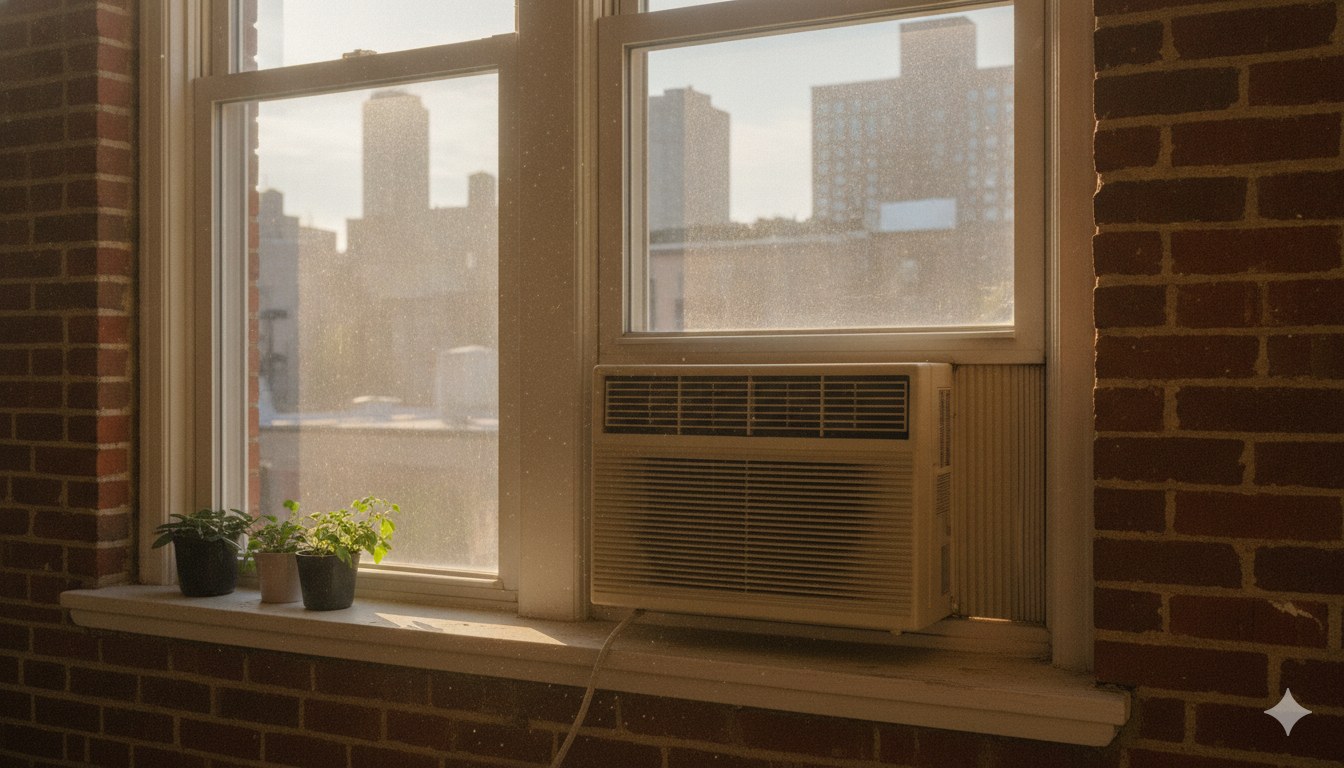
This is the single biggest surprise in pollen-season apartments. A window AC draws outdoor air continuously — and outdoor air in June is saturated with grass pollen. Standard window unit filters aren't HEPA-rated; they're basic mesh screens designed to block insects and large debris, not 10-micron pollen grains. Meanwhile, the drip tray at the bottom collects condensation mixed with everything the unit has pulled in: a warm, damp environment that pollen and mold spores both love.
When we open an AC that hasn't been serviced since last fall, we find a filter coated in grayish particulate, a drip tray with visible residue, and evaporator fins that are dusty and often showing early mold. A quarterly clean — filter wash, drip tray flush, gentle non-toxic wipe-down of the fins — makes a measurable difference in air quality within 24 hours.
Couches, armchairs, curtains, and throw pillows near windows are pollen catchers. Even with windows closed, pollen seeps through gaps around aging frames and accumulates on the nearest upholstered surfaces. We see this consistently in pre-war apartments where window seals haven't been updated in decades — the same buildings where humidity builds up and summer mold becomes a secondary problem. (If mold is also on your radar, our guide to stopping summer mold in NYC apartments covers that angle.) A HEPA vacuum pass over these surfaces twice a week — slow, overlapping strokes with an upholstery attachment — removes significantly more allergens than a standard once-over.
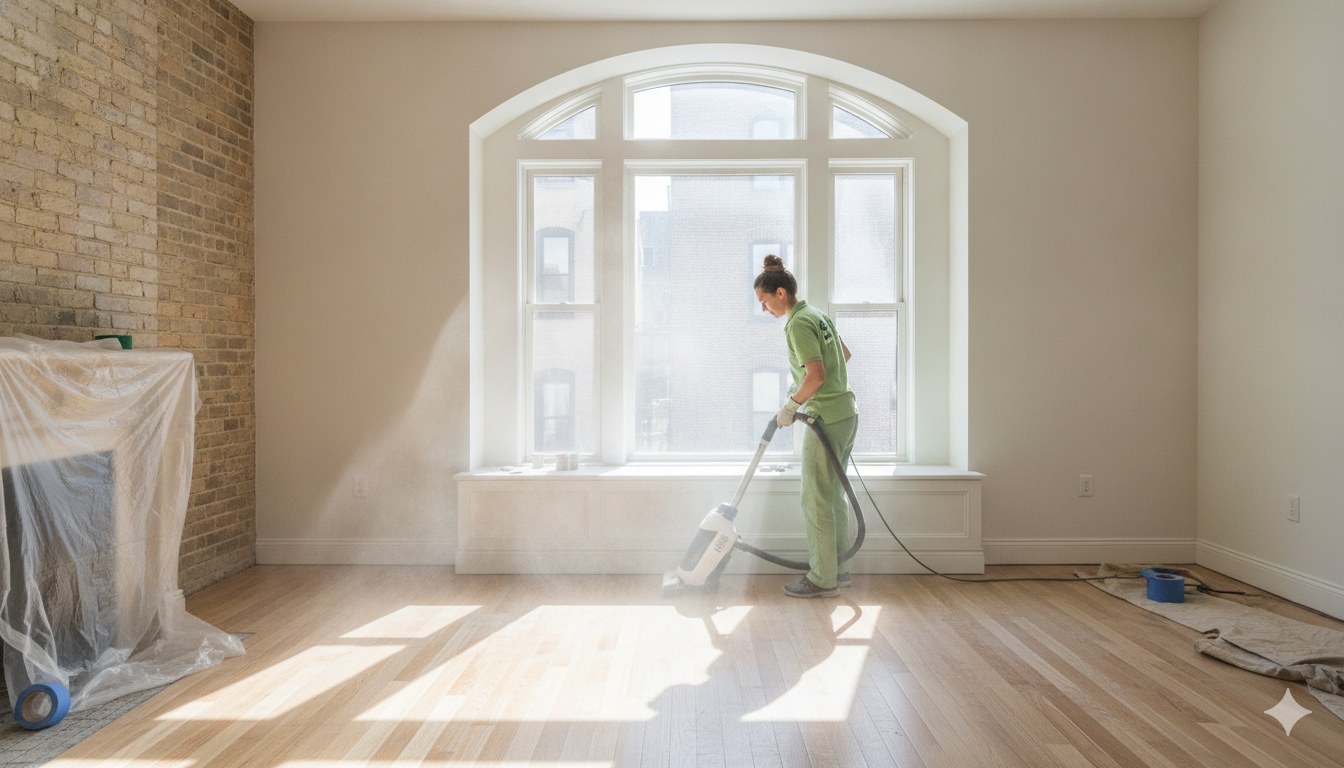
The transition zone from outside to inside is where allergen concentration is highest. Shoes carry pollen directly from street to floor; any draft from an opening door sends airborne pollen onto the entry rug, shoe rack, and lower cabinet surfaces. Hard floors look clean after a standard sweep but often still carry fine particles — a damp microfiber mop traps allergens instead of redistributing them into the air.
Pollen that settles on hair during the day transfers directly to pillowcases overnight. This is one of the more frustrating cycles for allergy sufferers: you take medication, feel better through the afternoon, then spend seven hours breathing in a pollen-dusted pillowcase. Washing bedding weekly in warm water and using pillow encasements significantly reduces overnight exposure — it's a small change with an outsized effect on morning symptoms.
These are almost never cleaned. Bathroom fans and HVAC return vents accumulate dust year-round, but during June they become a secondary allergen distribution point every time the system cycles. A quick wipe with a damp cloth takes two minutes and eliminates a source most cleaning guides don't mention.
There's a counterintuitive assumption we hear from clients: "if it smells like cleaning, it must be working." Not quite. Many conventional cleaning products — especially those with synthetic fragrances — release volatile organic compounds (VOCs) that irritate the respiratory tract and can worsen allergy symptoms on top of pollen exposure. The for allergy-prone households.
When you're already inflamed from pollen, adding VOC irritants to the air compounds the problem. Plant-based, fragrance-free cleaners handle the vast majority of allergen removal tasks just as effectively — without the secondary respiratory load. For home use, we recommend building your routine around products from , which are formulated without synthetic fragrance, ammonia, or bleach.
For a 1–2 bedroom NYC apartment during peak pollen season, this is what actually keeps symptoms manageable:
Most of these items take under 10 minutes each. The key is frequency over intensity — surface allergens don't disappear between deep cleans. They migrate from surfaces into the air and back again with every draft and footstep.
Some situations call for more than a regular routine. Book a professional if you've just moved into a new apartment with unknown cleaning history, if you're starting allergy treatment and want to reduce your baseline load, if someone in your household is severely sensitive to dust mites or pet dander left by a previous tenant, or if your symptoms aren't responding to medication alone.
Our NYC home cleaning service uses a non-toxic product protocol with HEPA vacuuming of all soft surfaces, microfiber flat mopping, and AC filter cleaning. Most clients with allergies notice a difference within the first 24 hours of a deep clean. If you want to start there, booking takes about two minutes and we typically have availability within the week.
Yes. Consistent HEPA vacuuming and damp mopping significantly reduces settled pollen on surfaces. Industry research indicates that regular professional deep cleaning can reduce airborne allergens by up to 98% immediately following a session — though that benefit diminishes without ongoing maintenance.
Closed during peak hours — roughly 5 to 10 AM — when pollen counts are highest. If you run a window AC, treat it as an open window for allergy purposes: clean its filter weekly during June and July since it draws outdoor air continuously.
They can be. Many synthetic fragrances release VOCs that irritate the respiratory tract. The NYC Health Department recommends unscented or fragrance-free products for allergy-prone households. If a cleaning product has a strong chemical smell, it may be worsening the problem it's supposed to solve.
Once a week for pillowcases; every one to two weeks for duvet covers and fitted sheets. Warm water (around 60°C / 140°F) is more effective than cool water for breaking down allergen proteins from dust mites and pollen residue.
Yes, particularly for allergen hotspots like mattresses, upholstered furniture, and AC units that are difficult to clean thoroughly with standard home tools. A professional session every four to six weeks through allergy season makes a real difference in cumulative allergen load.


-01.png)